Use case · Brand monitoring
Dashboard previewBrand monitoring that shows what changed, not just a score
Follow public mentions of a brand, product or campaign, read the themes behind the volume, and keep coverage visible so a quiet period is not mistaken for calm.
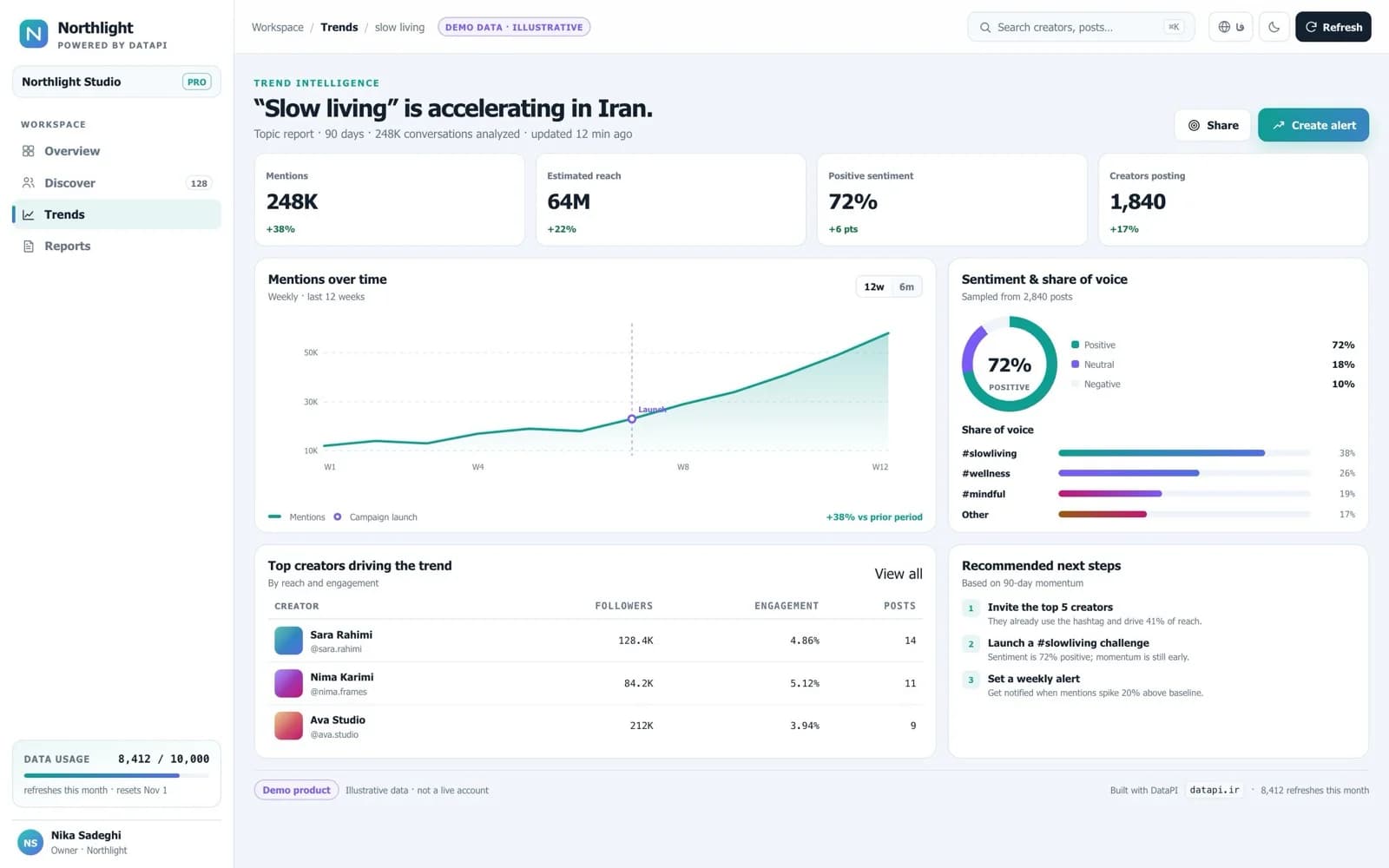
Monitoring dashboards hide their own gaps
- Brand managers.
- Social media teams with a fixed watchlist.
A monitoring tool that stops collecting looks calmer, not broken. Brand teams then report a decline in conversation that is actually a decline in collection.
Keeping run status and coverage beside the volume makes the difference visible, and the themes behind the count explain what changed.
Capabilities
Where this topic leads
Follow the relationship that matches the question you are trying to answer.
How it works
- 01
Define the subjects
Choose the brand terms, accounts and hashtags that should be watched.
- 02
Review the delta
Read new mentions with their observation times and group them by theme.
- 03
Escalate what matters
Route repeated concerns to the owner instead of forwarding a dashboard.
What changes for your team
- A baseline you can defend.
- Quiet periods that are verified, not assumed.
- Themes instead of a single sentiment number.
- Public mentions only; private messages and closed groups are out of scope.
- Coverage depends on what the source exposes at collection time.
Frequently asked questions
Chat alerting is not part of this release. Run events can reach a workspace webhook, which your own tooling can turn into a notification.
The API and analytics behind this use case
Each metric family links to its definition, formula and limit in the glossary, and each endpoint to its contract page. These are the paths this workflow actually travels.
Metric families
Related pages
Run one operation and check the coverage
Sign in with a one-time code, create a credential and call the catalog. Plans are monthly, and there is no checkout on this site.