Product · Dashboard preview
Creator discovery and comparison
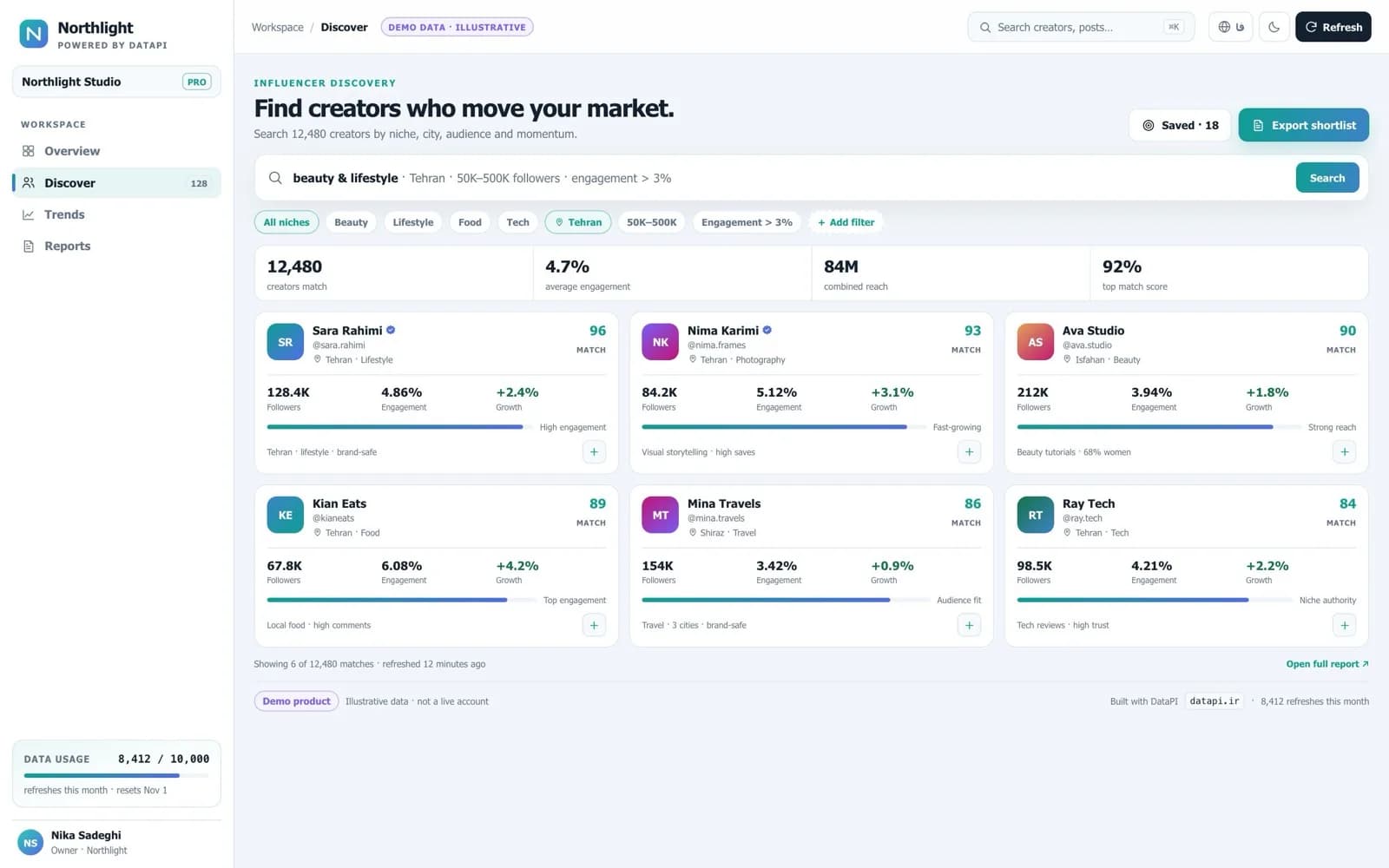
Build a shortlist from public creator signals: search by topic and market, compare profiles side by side, and keep the reason for every inclusion next to the evidence.
Follower count is the easiest number and the worst filter
- Influencer marketing teams running repeat campaigns.
- Agencies that must justify a shortlist to a client.
- Brand teams evaluating a new market or category.
A long list sorted by audience size tells you who is popular, not who fits a brief. Teams then spend days reading profiles manually, and the final shortlist rarely records why each creator was included.
Discovery keeps the comparison criteria explicit: topical fit, content format, visible engagement and market. You can compare a small set on the same fields and save the reasoning with the list.
Capabilities
Where this topic leads
Follow the relationship that matches the question you are trying to answer.
How it works
- 01
Write the brief
Define the market, topic, audience and non-negotiable criteria before searching.
- 02
Search and filter
Collect candidates from public profile and content signals, then remove weak fits.
- 03
Compare and document
Compare the finalists on identical fields and save the shortlist with its reasoning.
What changes for your team
- A shortlist that can be defended in a client review.
- Less time spent re-reading the same profiles in spreadsheets.
- Clearer separation between evidence and the team’s judgement.
- Public signals cannot confirm audience demographics, purchase intent or conversion performance.
- Engagement figures are platform-reported and can be affected by bots, pods or paid distribution; treat anomaly detection as a prompt for review.
- Final audience and performance validation belongs to creator-authorized data or platform reporting.
Frequently asked questions
No. It organizes public evidence for a human decision. Performance is measured after the collaboration with campaign-side data.
It can surface anomalous engagement patterns that deserve review. It does not certify an audience as authentic or fraudulent.
Related pages
- Influencer shortlists built on evidence, not follower countUse cases
- For influencer agencies that must justify a shortlistSolutions
- Discover: find the right creators and conversationsBy goal
- Social Intelligence workspaceProducts
- TrackersProducts
- Creator cadence check: what public data can and cannot answerUse cases
Run one operation and check the coverage
Sign in with a one-time code, create a credential and call the catalog. Plans are monthly, and there is no checkout on this site.